One of the areas I have been tightening up recently is release verification for Promethix projects.
That has led to the introduction of the Promethix Trust Centre at trust.promethix.dev, which exists to make it easier to validate and verify Promethix build and release artefacts rather than treating published packages and images as things that should simply be trusted on sight.
The idea is straightforward: if I publish something, there should also be a clear way to answer basic questions such as:
I have written a Kubernetes operator to help provision Cloudflare Tunnel route mappings automatically.
The problem was fairly simple. I already had Cloudflare Tunnel running in the cluster, and I had a small number of routes configured manually, but I did not want to keep managing every hostname through the Cloudflare UI as more sites moved over. I also did not want to fall back to a wildcard route, because not every domain and subdomain was intended to move that way.
During May 2026 I made a fairly substantial round of improvements to the detached garage rack that supports the wider Promethix platform. This was not just a cosmetic tidy-up. The work was aimed at improving power resilience, separating failure domains, cleaning up management access, and making the rack a more solid foundation for future growth.
The garage already benefits from a 5 kW solar installation fitted in 2024, backed by three battery storage units that provide substantial energy capacity for overnight and low-generation periods. During the solar installation a new consumer unit was also fitted, which created a sensible base for later electrical work around the rack.
In my earlier post, Homelab Infrastructure Overview (2026), I described the broader shape of the platform and noted that K3s was still current, with RKE2 as the likely next step.
That migration has now happened.
This is a short engineering update on what changed moving from the old K3s alpha cluster to the new RKE2 delta cluster, and why the main improvement was not just the distribution itself, but the sharper separation between platform infrastructure and application workloads.
My earlier post on the Red Hat oVirt cluster captured a specific point in time in the evolution of my home platform. Since then, the environment has changed substantially. What started as a traditional homelab has become something much closer to a small enterprise infrastructure platform: virtualisation, segmented networking, shared storage, Kubernetes, automation, GPU workloads, and a mixture of personal, development, and real hosted services.
This post is a high-level overview of where the platform stands in 2026.
I've published a small NuGet package called AdoScope that brings a scoped Unit of Work pattern to Dapper and ADO.NET, without the need to hand-roll your own classes.
It's heavily inspired by the excellent DbContextScope from the EF world (which I've used many times), but designed for raw ADO.NET and Dapper.
AdoScope takes care of DbConnection and DbTransaction management behind the scenes, so there's no need to pass transactions around or write boilerplate Unit of Work code, just clean, focused repository logic.
A former colleague of mine used to say, "Savings will be made, whatever the cost"; a good quote, I thought.
What I've learnt from Robert C. Martin AKA Uncle Bob, founder of the agile manifesto, is something to contemplate.
Why are Programmers Slow?
Programmers are slow because they started fast, excited about the new project to build, and without establishing a solid design and architecture. They reach a point where they are only 1% of their productivity when they started.
Adding a new node to an existing oVirt Cluster should be a seamless process, but sometimes you hit a snag. That's exactly what happened to me recently when I realized that only virtual machines (VMs) without an OVN network were launching. For those who might not be familiar, OVN (Open Virtual Network) is a system that provides network virtualization to containers and VMs, and it's a critical component for managing external VM networks within oVirt's infrastructure.
If you're navigating the complexities of virtualization management systems, you might share my recent challenge with Red Hat's oVirt, the open-source virtualization management platform. For those unfamiliar, oVirt orchestrates virtual machines, manages resources, and provides a centralized interface for distributed computing environments. It's worth noting that while my experience is with oVirt, the insights I've gained may also benefit those working with KVM or XEN—especially KVM, since it's the underlying technology in oVirt.
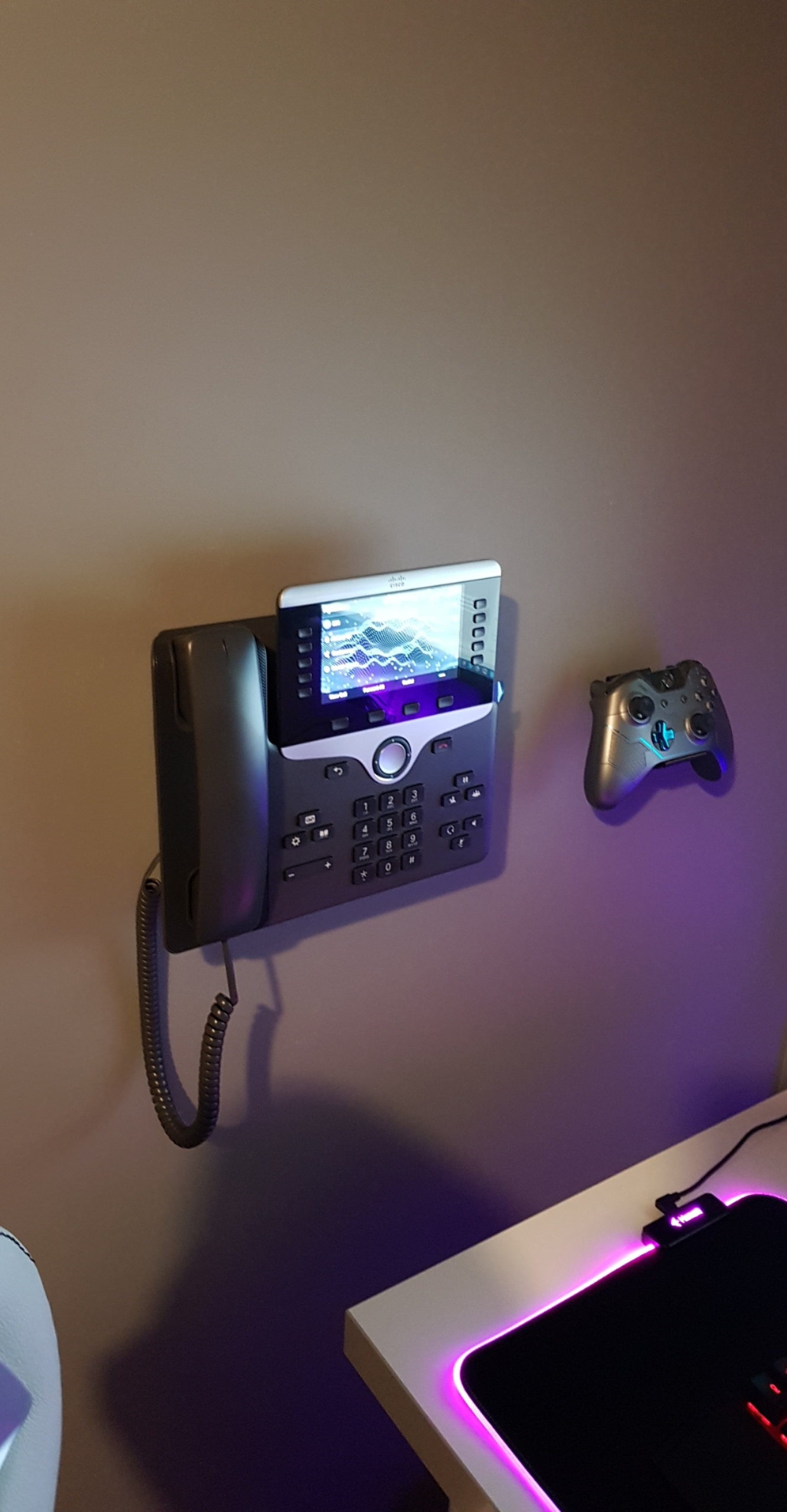
Having just spend a few days settings up a Cisco 8851 to work with FreePBX, I'll write an article shortly posting all my configs for this, hopefully save someone time one day.